Arkansas divorce records are official documents that show the legal end of a marriage in the state. They include important details such as the names of the spouses, the date of divorce, and the court that issued the ruling. These records are essential for verifying marital status, handling property division, and completing legal or administrative tasks. Many people perform a divorce record lookup in Arkansas to obtain certified copies for personal, legal, or professional reasons.
Divorce records are maintained by county family courts and may be public or confidential depending on the case. Anyone involved in the divorce, authorized family members, or legal representatives can request copies, while the general public can access limited information. Arkansas divorce records also provide proof for child support, custody agreements, and other court orders, making them legally significant. Accessing the correct record ensures accurate documentation, prevents disputes, and helps in planning future legal or personal matters. Certified copies are often required for official processes, including remarriage or updating identification documents.
Types of Divorce Records in Arkansas
Arkansas divorce records primarily consist of divorce certificates and https://airsdsmvpub.dfa.arkansas.gov/mydmv/_/ divorce decrees, each serving a distinct purpose. Both documents are official, but they differ in detail and use.
Divorce Certificate
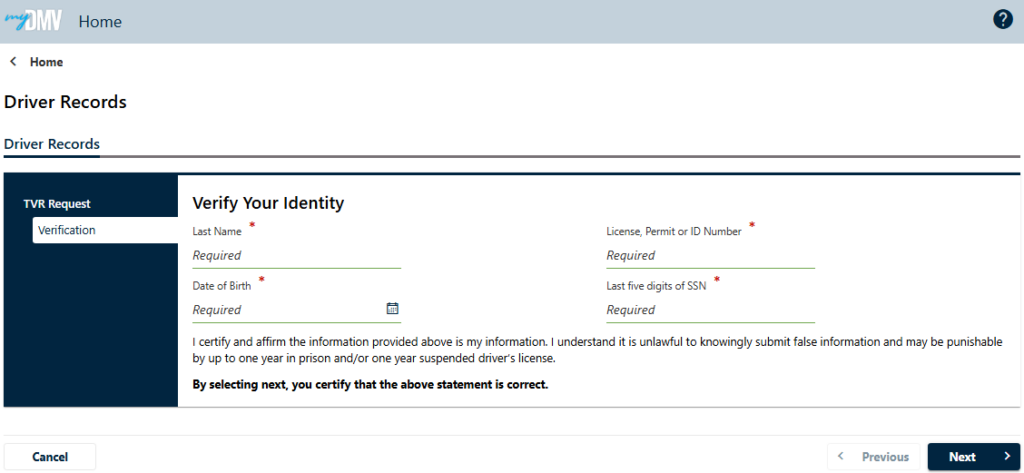
A divorce certificate is a brief document confirming that a marriage has legally ended. It acts as proof of divorce for government agencies, employers, or financial institutions.
Points include:
- Issued by: The Arkansas Department of Health (ADH) or the local county clerk’s office.
- Contents: Names of both spouses, date of divorce, and county of filing.
- Use cases: Applying for a new marriage license, updating legal records, or changing a name.
- Requesting: Typically requires a formal application, valid ID, and a small fee.
This document provides a quick summary without revealing detailed court decisions or arrangements. It is ideal for situations where only confirmation of divorce is needed.
Divorce Decree
A divorce decree is a detailed court order issued after the final hearing. It outlines all legal resolutions between spouses, including custody, property, and financial matters.
Important aspects include:
- Issued by: The Circuit Court where the divorce case was filed.
- Contents: Child custody and visitation agreements, property division, alimony, and support obligations.
- Legal authority: The decree serves as the binding court order, enforceable by law.
- Obtaining: Copies are available through the county clerk or court records office, often requiring a formal request and fee.
Unlike the certificate, the decree provides full legal details of the divorce, making it essential for disputes or modifications.
Summary Table:
| Record Type | Issuing Authority | Details Included | Primary Use |
|---|---|---|---|
| Divorce Certificate | Arkansas Department of Health / County Clerk | Names, date, county | Proof of divorce, personal/legal records |
| Divorce Decree | Circuit Court | Custody, property, support, orders | Legal enforcement, dispute resolution |
Divorce Record Certificate Explained
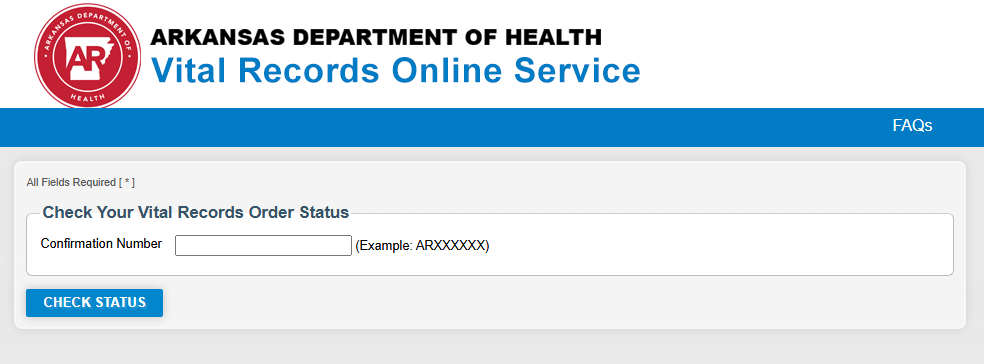
A divorce record certificate in Arkansas is an official document that https://vitalrecords-utilities.ark.org/status-check confirms a legal divorce has occurred. It lists key details such as the parties’ names, the court, and the filing date, making it a valid public record for legal or personal purposes.
What Is Included in a Divorce Record Certificate
A divorce record certificate that Arkansas residents receive contains essential information about the case. This includes:
- Names of the spouses – full legal names at the time of divorce
- Case number – unique identifier assigned by the court
- Filing and finalization dates – when the divorce was filed and legally completed
- Court information – the county and judge who oversaw the case
- Addresses – sometimes the last known addresses of both parties
These details make the certificate an official public record. It can be used for proof of marital status, legal name changes, or financial and personal documentation.
Legal Validity and Usage
The certificate carries legal weight as a record of the court’s decision. Arkansas courts issue it in a standardized format, ensuring that employers, government agencies, or other institutions can rely on it as evidence. For verification, it often references the case number and filing date, which allow interested parties to cross-check with court archives. Individuals can request a certified copy from the Arkansas Department of Health – Vital Records or the county court where the divorce was finalized.
Certified copies are especially useful for:
- Updating identification documents
- Applying for government benefits or remarriage
- Resolving property or custody matters
By including all essential details, the divorce record certificate Arkansas provides serves as an authoritative confirmation of a legal divorce. Its status as a public record ensures transparency and accessibility for legitimate purposes.
Grounds for Divorce in Arkansas
In Arkansas, couples can file for divorce based on either fault-based or no-fault grounds. Fault-based grounds include adultery, cruelty, or felony conviction, while no-fault divorce requires an 18-month separation.
Fault-Based Grounds
Fault-based divorce applies when one spouse’s behavior significantly harms the marriage. Arkansas law recognizes several specific reasons:
- Adultery: Proof that a spouse engaged in sexual relations outside the marriage. Evidence can include admissions, communications, or witness accounts.
- Cruelty: Physical or mental abuse that endangers the spouse’s safety or emotional well-being. Repeated patterns of abuse are key for the court.
- Felony Conviction: If a spouse is convicted of a serious crime and sentenced to imprisonment, the other spouse may file for divorce.
Other behavior sometimes considered under fault-based claims can include alcohol abuse, drug addiction, or prolonged insanity, but these often require substantial documentation or medical records to support the claim. Courts assess whether these actions caused significant marital strain.
No-Fault Grounds
Arkansas also allows no-fault divorce, which does not require proving wrongdoing. The main criterion is:
- 18-Month Separation: The couple must have lived apart continuously for at least 18 months. This period demonstrates an irretrievable breakdown without assigning blame.
No-fault divorce tends to be quicker and less contentious since it avoids detailed accusations or evidence of misconduct. Many couples choose this option to simplify proceedings and reduce emotional stress.
How to Obtain Arkansas Divorce Records
You can get Arkansas divorce records through online portals, county offices, or third-party services. Each method offers different steps, fees, and levels of convenience depending on your needs.
Online Portal
For those seeking efficiency, Arkansas provides an online divorce record lookup through county-specific portals. This allows users to request records without visiting an office.
Steps process:
- https://vitalrecords.egov.com/CDC.VitalRecordsMVC.Web/Wizard/AR/Municipality/SelectMunicipality
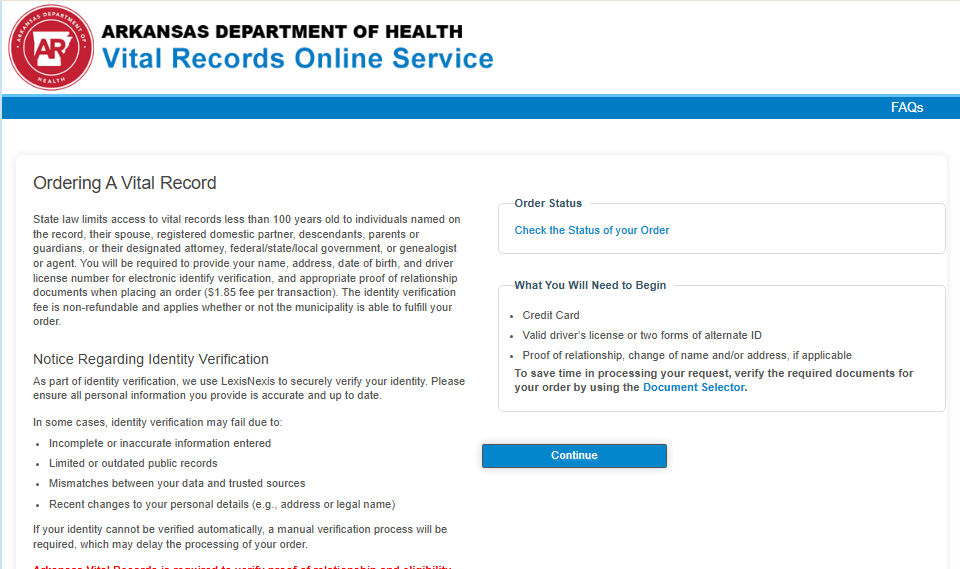
- The official county court or clerk website.
- Locate the Divorce Records or Vital Records section.
- Fill out the required forms with the individual’s full name, date of divorce, and county.
- Upload any identification documents if needed.
- Submit the request and pay applicable fees online (usually $10–$25 per record).
- Receive the record electronically or by mail.
Some counties provide screenshots of the online forms to guide users through submission. Online portals often update in real time, making them a quick option for legal, genealogical, or personal purposes.
Physical Office
If online access is unavailable, you can obtain records directly at the county clerk’s office. Each county in Arkansas maintains divorce records filed within its jurisdiction.
County-specific instructions:
- Locate the Clerk of Court in the county where the divorce was finalized.
- Complete a request form at the office. Some offices require proof of identity, such as a driver’s license.
- Pay the standard processing fee, typically $10–$20.
- Wait for in-person pickup or request mail delivery.
The office can provide immediate assistance from staff and allow verification of record details before leaving.
Third-Party Services
Several third-party services also offer Arkansas divorce record searches. These services are useful if you need records from multiple counties or prefer a guided process.
Points:
- Verification: Reputable services confirm records with county data.
- Fees: Costs may range from $15–$40 depending on speed and document type.
- Security: Ensure the service uses encrypted connections and does not share personal information.
Third-party providers often combine multiple record types, such as marriage or court filings, which can save time for research or legal purposes.
Required Details & Documents for Application
To complete a divorce records application in Arkansas, applicants must provide specific personal and legal information. Having the correct documents ready ensures a smoother and faster process. When requesting divorce records, the Arkansas Department of Health and local county courts require key details to verify the applicant’s identity and the record being requested.
Typically, the application form asks for:
- Full names of both spouses at the time of divorce
- Date of divorce or approximate year
- The county where the divorce was finalized
- Reason for the request
- Applicant’s relationship to the parties
Applicants must also provide valid identification, such as a government-issued ID or passport, to confirm their eligibility. For those requesting records on behalf of someone else, additional proof of relationship or legal authorization may be necessary. This ensures privacy and compliance with state law.
Fees & Processing Time
Arkansas divorce record fees typically range from $10 to $25 per copy, depending on the county. Processing usually takes 3–7 business days for standard requests, though expedited options may be available.
The official cost for obtaining a divorce record in Arkansas depends on whether the request is for a certified or uncertified copy. Certified copies carry a higher fee because they are legally recognized for use in courts, legal matters, and official documentation. Most counties require a processing fee that covers administrative handling and record retrieval.
Common fee details:
- Certified copy: $15–$25 per record
- Uncertified copy: $10–$15 per record
- Expedited delivery: Additional $5–$10
To process a request, applicants must complete identity verification. This can include providing a government-issued ID or a notarized form, especially if requesting records in person or by mail. Some counties also accept online requests, which often speed up processing and allow delivery via mail or digital format.
Arkansas Divorce Records FAQs
Arkansas divorce records are public documents that detail final divorce rulings, including court dates and case information. They can be requested through the county clerk’s office or online databases for legal, personal, or research purposes.
What Are Arkansas Divorce Records?
These records include final divorce decrees, court transcripts, and related filings. They may also show child custody, support agreements, or property settlements. While most records are public, sensitive details, such as DHS cases involving minors, may be restricted to protect privacy.
How Can One Access Arkansas Divorce Records?
Access typically requires contacting the county clerk where the divorce was finalized. Options include:
- In-person requests at the county courthouse
- Mail-in requests with proper identification
- Online databases provided by official state portals
Fees may apply for copies, and processing times can vary by county.
Are All Divorce Records Public?
Most final divorce documents are public, but certain filings may be sealed. Cases involving child welfare or DHS investigations may limit public access. Court transcripts may require additional permissions to obtain.
How Are Records Used?
Divorce records are commonly requested for:
- Legal proceedings or verification of marital status
- Genealogy or personal history research
- Property or inheritance claims
Using these records responsibly ensures compliance with state privacy laws and maintains confidentiality when needed.
Can Divorce Records Be Obtained Online?
Many Arkansas counties offer online access to divorce records through official court or state portals. Users can search by names, case numbers, or years, though older records may only be available at the courthouse. Fees or authorization may be required for sensitive documents.