
Arkansas criminal records provide a detailed history of a person’s arrests, charges, convictions, and offense history. These records are public, meaning certain organizations, employers, and law enforcement agencies can access them to check criminal background records in Arkansas. They help verify a person’s legal history, protect public safety, and support decisions in hiring, renting, or other official matters. Criminal records also include court outcomes and case dispositions, giving a clear view of past legal issues. Updated regularly, they reflect the most accurate and current information about arrests and convictions.
These criminal background records in Arkansas include multiple types of offenses, ranging from minor infractions to serious crimes. Records often list arrests, filed charges, convictions, and pending cases. Some records, like juvenile or sealed cases, may have limited access, while adult offenses are usually public. Having access to accurate records helps organizations make informed decisions and prevents misunderstandings. Arkansas criminal records serve as a reliable source for anyone needing official information about an individual’s legal history. They also promote accountability by showing offense patterns and past court decisions, making them an essential tool for legal, professional, and safety purposes.
What Are Arkansas Criminal Records?
Arkansas criminal records are official documents that detail a person’s offense history within the state. These records include information about arrests, convictions, and court proceedings linked to criminal activity. Criminal records in Arkansas capture a variety of legal information, ranging from police reports to final court judgments. They help law enforcement, courts, and other agencies track criminal activity and ensure accurate reporting of past offenses. These records may also be used in employment background checks, professional licensing, and legal investigations.
Types of Arkansas Criminal Records
Arkansas criminal records cover multiple types of legal documents and reports. Some of the most common include:
- Arrest Records: Details of arrests, including date, location, and charges.
- Court Convictions: Outcomes of criminal cases, including sentences and fines.
- Criminal Filings: Records of complaints or charges filed against an individual.
- Judgments & Sentences; Court decisions, probation details, and penalties.
- Traffic Offenses: Records of violations that may qualify as infractions or misdemeanors.
| Record Type | Description |
|---|---|
| Arrest Records | Document law enforcement actions against a suspect |
| Court Convictions | Shows whether charges led to conviction or dismissal |
| Criminal Filings | Initial legal charges filed in court |
| Judgments & Sentences | Court decisions including fines, probation, or jail |
| Traffic Offenses | Minor legal violations categorized as infractions |
Felony, Misdemeanor, and Infraction
Arkansas criminal records also classify offenses by severity:
- Felony: A serious crime with potential prison time exceeding one year, such as burglary, assault, or drug trafficking.
- Misdemeanor: Less severe offenses with jail time under one year or fines, including minor theft or simple assault.
- Infraction: Minor violations, usually punished by fines only, such as traffic tickets or local ordinance breaches.
These classifications help courts, employers, and agencies understand the seriousness of an individual’s offense history. Felonies carry long-term consequences, while misdemeanors and infractions are typically considered less severe.
Arkansas Criminal Court System
The Arkansas criminal court system handles all criminal cases, from minor offenses to serious felonies, and maintains official Arkansas criminal records for public reference. It is structured across multiple levels, each with defined authority and responsibilities for criminal filings.
Supreme Court of Arkansas
The Arkansas Supreme Court serves as the state’s highest legal authority. It reviews cases from lower courts, focusing on legal errors and constitutional matters rather than re-examining evidence. While it handles a few criminal cases directly, its rulings can influence sentencing standards and procedures statewide.
Court of Appeals
The Arkansas Court of Appeals manages appeals from trial courts, ensuring that cases follow proper legal procedures. It reviews errors in case filing and trial conduct and issues written opinions that shape future court decisions. Citizens or attorneys contesting a verdict in Benton, Pulaski, Saline, or other counties often rely on this court to resolve disputes.
Circuit Courts
Circuit Courts act as primary trial courts for serious criminal matters, including felonies and significant misdemeanors. They have court jurisdiction over large geographic areas, often encompassing multiple counties. Each circuit maintains detailed records of criminal filings, arrest warrants, indictments, and trial outcomes. Cases in counties like Pulaski, Benton, Saline, Washington, and Faulkner are first handled here before possible appeals.
Local District and City Courts
At the local level, district and city courts handle minor offenses, traffic violations, and preliminary hearings. These courts record misdemeanors and lesser criminal charges, offering the public insight into community-level legal activity. Each county maintains its own filings, allowing residents to check local criminal records efficiently.
How to Get Arkansas Criminal Records
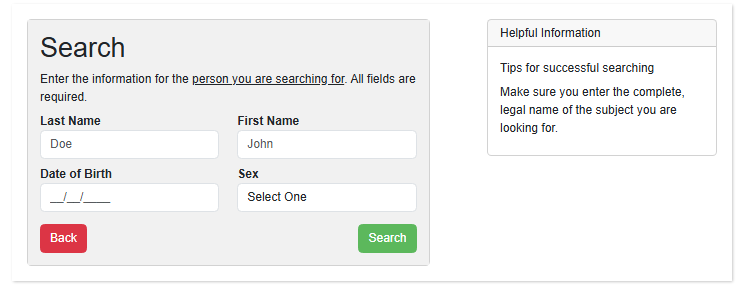
Obtaining Arkansas criminal records is possible both online https://arch.ark.org/search and by mail. Each method has specific steps, fees, and requirements for requesting criminal background records in Arkansas.
Online Method
Getting Arkansas criminal records online is the fastest way to access arrest information, charges, and case filings. The Arkansas State Police (ASP) provides an electronic system where users can request criminal background records in Arkansas securely.
How to Get Arkansas Criminal Records Online: Steps
- Go to the Arkansas Criminal History Search Page
The ARCH system is offered by the state of Arkansas. This is the correct online site for name‑based searches for criminal history. (The old link you tried has been replaced.) - Register or Log In
Users may need to create a state account or log in, especially for detailed reports. Name, date of birth, and other identifiers help ensure accurate matches. - Enter Search Details
Input the person’s full name, known aliases, and date of birth. The system returns a list of matches you can choose from. - Submit the Search
Confirm the information and submit your inquiry. The online system will look for records such as arrest history, conviction details, and registration status. - View or Download Records
If a match is found, results will display arrest and conviction details. You can generally view and print a downloadable PDF of the record.
By Mail
Requesting Arkansas criminal records by mail is an alternative for those who prefer a paper process or cannot use the online portal. The process uses ASP–122 request forms and involves postal submission and payment.
Instructions to Get Arkansas Criminal Records by Mail:
- Obtain the Request Form (ASP–122)
Download the ASP–122 form from the Arkansas State Police website or request a copy by contacting the Records Division directly. - Complete the Form
Provide:- Full legal name and aliases
- Date of birth
- Social Security number
- Purpose of the request
- Prepare Payment
- The standard fee is $10 per record.
- Payment can be made via check or money order payable to “Arkansas State Police.”
- Mail the Form and Payment
Send the completed form and payment to: Arkansas State Police
Criminal Records Section
1 State Police Plaza Drive
Little Rock, AR 72209 - Processing Time
Mail requests typically take 2–4 weeks for processing. Once complete, a physical copy of the criminal background record will be mailed to the requester’s address.
Detailed Sections of Arkansas Criminal Records
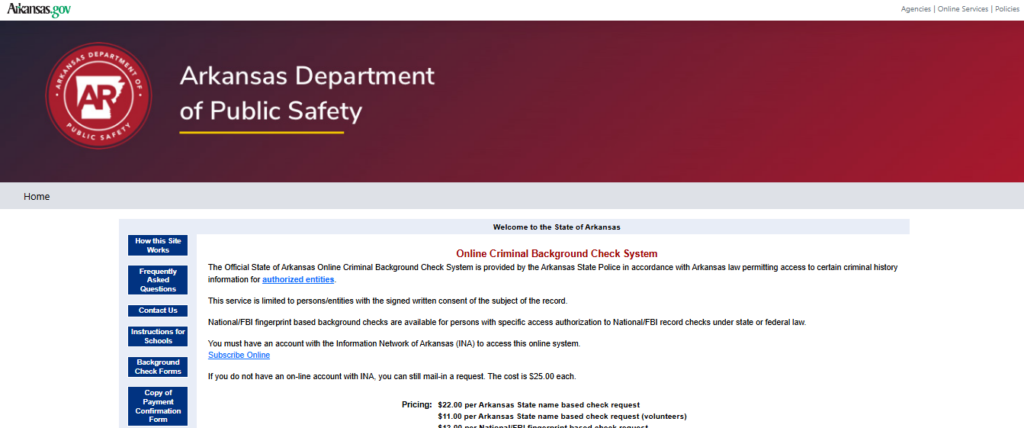
Arkansas criminal records show an individual’s offense history, https://cbc.ark.org/ court convictions, and criminal filings, giving a clear view of arrests, charges, and case outcomes.
Felony
Felonies are serious offenses, such as murder, armed robbery, or major drug crimes, carrying long prison terms or heavy fines. Records include the offense type, court convictions, case ID, and status of pending or dismissed cases, helping track legal proceedings and criminal filings over time.
Misdemeanor
Misdemeanors cover less severe crimes like petty theft, DUI, or minor assault, often resulting in probation, fines, or short jail sentences. These records capture offense history, court convictions, case filings, and whether cases are pending or dismissed, providing a concise view of legal activity.
Infraction
Infractions are minor violations, commonly traffic offenses, that usually involve fines rather than jail time. Records show offense history, case filings, and outcomes such as paid fines or compliance with court directives, allowing a simple reference for minor legal matters.
Arrests
Arrest records document detentions by law enforcement, including the date, location, alleged offense, and booking information. They also track case ID and disposition, indicating whether the individual was released, pending trial, or transferred, without implying a conviction.
Charges
Charges define the allegations filed by prosecutors and form the basis for court proceedings. Records include the type of charge, court filings, case ID, and whether cases are pending or dismissed, clarifying the legal scope of an individual’s offense history.
Case Filings
Case filings consist of all court-submitted documents, including complaints, motions, and hearing notices. These filings are linked to a case ID and track the timeline of legal proceedings, recording both active and resolved cases for accurate reference.
Arkansas Criminal Record Act & Laws
The Arkansas Criminal Record Act, codified in Sections 12-12-1501 to 12-12-1513, establishes the rules for maintaining, sharing, and using criminal records in the state. It sets clear procedures for criminal filings, administration of records, and public access.
Overview of the Act and Its Purpose
The Arkansas Criminal Record Act creates a central repository for all criminal records, including arrests, convictions, and dispositions. This repository is managed by the state to ensure consistent record-keeping and legal compliance. The act outlines how records can be submitted, stored, and accessed, helping maintain accurate and timely criminal information.
Points include:
- Criminal filings must be reported to the central repository promptly.
- Records include arrests, charges, convictions, and any court dispositions.
- Registered sex offenders are specifically tracked and included under this law.
- Certain information is considered unrestricted, meaning it can be accessed by the public, while other details require specific authorization.
The law also clarifies administration responsibilities, including record maintenance, fees, and procedures for corrections or updates. Agencies submitting records must follow the state’s rules and procedures to avoid legal issues.
Access, Fees, and Legal Requirements
Arkansas law sets specific rules for who can access criminal records and under what conditions. The act allows:
- Law enforcement and government agencies are to obtain full criminal histories for official use.
- Private individuals and organizations can request certain unrestricted information, often for employment or licensing purposes.
- Fees apply for processing record requests, with amounts determined by the repository.
The act also mandates legal requirements for protecting sensitive information.
Example:
- Juvenile records and certain expunged cases are not accessible to the general public.
- Data must be submitted accurately and within designated timelines.
Registered Sex Offender Tracking
A separate section of the act addresses registered sex offenders. Offender information must be maintained in the central repository and made available for law enforcement checks and community safety purposes.
- Offender lists are updated regularly to reflect new filings or changes.
- Agencies are required to verify and report compliance with state rules.
- Public access is limited to ensure safety while protecting privacy where appropriate.
Administration and Enforcement
The act assigns oversight responsibilities to the state repository. Agencies, courts, and law enforcement officers must follow the administrative rules for submission, corrections, and disclosure of criminal records. Failure to comply can lead to penalties, fines, or legal consequences.
- Record corrections can be requested by the individual involved.
- Agencies must maintain accurate filing, including any updates to criminal filings.
- The act also specifies procedures for requesting criminal record reports for employment, licensing, or personal reasons.
By establishing clear legal requirements, record submission procedures, and access rules, the Arkansas Criminal Record Act ensures that criminal information is accurate, organized, and appropriately available. It balances public safety, administrative efficiency, and privacy protection.
Special Records
Special criminal records in Arkansas include sealed records, the sex offender registry, and out-of-state or federal criminal history. Each type has specific rules about public access and reporting, which affect background checks.
Sealed Records
Sealed records in Arkansas are criminal cases that are legally hidden from the general public’s view. Once a record is sealed, it generally cannot be seen by employers, landlords, or the public. However, certain government agencies and law enforcement can still access these records. The sealing process requires filing a petition with the court, which reviews eligibility based on the offense type, time passed, and compliance with sentencing requirements.
Common points about sealed records include:
- Felony or misdemeanor convictions may be eligible, depending on state law.
- Some serious offenses, like violent crimes or sex offenses, are usually not sealable.
- Sealing does not erase the conviction but limits who can see it publicly.
Sealed records are often considered during certain professional licensing or judicial reviews, but for most employment checks, they remain hidden.
Sex Offender Registry
Arkansas maintains a sex offender registry to track individuals convicted of sex-related crimes. The registry is public and contains information like the offender’s name, address, photo, and the nature of the crime.
Points about the registry include:
- Registration is required by law for a set period, depending on the conviction.
- The registry can be searched by residents to identify local sex offenders.
- Law enforcement agencies update the registry regularly to maintain accuracy.
Employers and the public can access limited registry information, which differs from standard criminal background records in Arkansas.
Out-of-State and Federal Criminal Records
Criminal records from other states or federal courts are separate from Arkansas state databases but may appear in comprehensive background checks.
These records can include:
- Federal convictions, such as fraud or drug trafficking.
- Criminal history from other states that report to national databases.
- Sentencing and probation details relevant to employment or legal proceedings.
Agencies performing background checks often combine state, federal, and out-of-state data to provide a complete profile.
Statistics & Victim Information
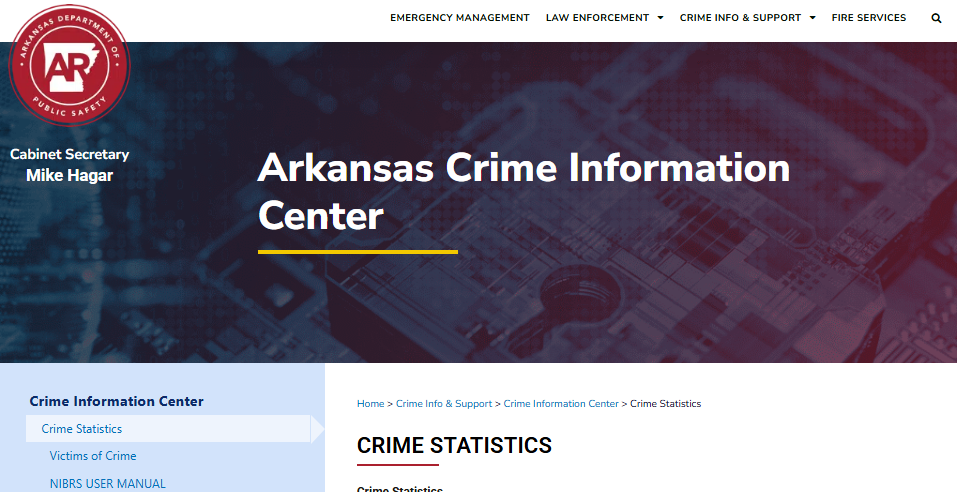
Arkansas crime statistics for 2022 show nearly 19,900 violent offenses and 75,176 property crimes, offering a clear snapshot of criminal patterns in the state. These official stats support insights https://dps.arkansas.gov/crime-info-support/arkansas-crime-information-center/crime-statistics/ into offense history, victim age groups, and factors like weapon use and victim‑offender relationship for those examining Arkansas criminal records.
Crime data can help the public make sense of how offenses vary by type and who is most often affected. In Arkansas in 2022, violent crimes such as aggravated assault, rape, robbery, and murder were tracked separately from property crimes like theft, burglary, and motor vehicle theft. Violent crime alone accounted for hundreds to thousands of incidents in each category. Property crime made up a larger share of total reported offenses that year.
Crime by Offense Type & Victim Details
Crime reports for 2022 break down offense history by type and include victim age data. For example, offenses involving adults and juveniles are recorded in age bands to show trends across generations. Law enforcement uses these figures when compiling official crime data, so patterns in victimization and perpetration become clearer.
Here’s a quick look at how crime was categorized in 2022:
- Violent Crime: physical harm or threat against a person
- Aggravated Assault
- Rape
- Robbery
- Homicide
- Property Crime: damage or theft without physical force
- Larceny‑Theft
- Burglary
- Motor Vehicle Theft
Victim‑Offender Relationship & Weapon Use
The Arkansas Crime Information Center also tracks victim‑offender relationships and weapon involvement for statewide offenses. These data help researchers and community members see whether victims knew their offenders (family, acquaintance, stranger), and what types of weapons were reported in incidents. Official NIBRS reports include details that can show patterns in how crimes against persons or property occurred.
FAQs About Arkansas Criminal Records
Criminal records in Arkansas are mostly public and can be requested through state or county agencies. Individuals can access their own records or perform background checks, but fees and processing times vary.
Are criminal records public in Arkansas?
Yes, most criminal records in Arkansas are public under state open record laws. This includes arrest reports, charges, and court dispositions. Some records, such as juvenile cases or sealed convictions, remain restricted. Anyone can request records from the Arkansas State Police, local law enforcement, or court offices following the official procedures.
How much does it cost to get a criminal background check?
The cost of a criminal background records check in Arkansas depends on the source. A standard state background check through the Arkansas State Police is around $20–$30. Additional fees may apply for fingerprinting or expedited processing. Online services may charge extra for convenience but usually provide faster results.
What is included in an Arkansas criminal record?
An Arkansas criminal record typically lists:
- Arrests and charges filed against an individual
- Court outcomes, including convictions, dismissals, or acquittals
- Sentencing details, such as fines, probation, or incarceration
- Offense dates and jurisdiction information
Federal or out-of-state convictions may not appear unless specifically requested through additional background checks.
How can I seal my criminal record in Arkansas?
Sealing a criminal record in Arkansas removes it from public access while keeping it available for law enforcement and certain employers. Eligibility usually depends on the offense type, completion of the sentence, and time since conviction. Filing a petition with the local court and meeting all requirements is necessary. Legal assistance can help ensure all criteria are met.
Can I access federal or out-of-state criminal records?
Arkansas state records do not include federal or out-of-state convictions. To check these, individuals must contact the Federal Bureau of Investigation (FBI) or the corresponding state agencies. Some background check services compile multi-state reports, but fees and processing times can be higher.