
Arrest records in Arkansas are official documents that list a person’s interactions with law enforcement, including arrests, charges, and case details. These records are maintained by local police departments, county sheriffs, and the Arkansas State Police. They often include the individual’s name, date of birth, arrest date, booking information, charges, and the agency involved. Some records may also show court outcomes or case dispositions when available. Arkansas arrest records are important for anyone needing verified information about a person’s arrest history or police records, whether for legal, professional, or personal reasons.
These records provide transparency about law enforcement actions and help the public and organizations verify criminal history accurately. Most arrest records are available under Arkansas law, though sensitive information such as juvenile cases or sealed records is restricted. Requests can usually be made in person, by mail, or online through official channels. Having access to accurate Arkansas arrest records allows employers, researchers, and individuals to confirm legal histories and make informed decisions. They also play a role in supporting accountability, crime analysis, and legal documentation across the state.
What Are Arkansas Arrest Records?
Arkansas arrest records are official documents that report when someone is taken into custody by law enforcement. They are public records, showing the details of an arrest but not necessarily proving guilt.
Arrest records in Arkansas provide information about individuals who have been apprehended by police for alleged crimes. These records are generally considered public criminal records under the state’s Freedom of Information Act (FOIA). This means that members of the public, including journalists, employers, or private citizens, can request them from law enforcement agencies or other authorized entities. They often contain key arrest report details, helping clarify the circumstances of an arrest.
Legal Status and Public Access
Arkansas law recognizes arrest records as part of the public record system. Anyone can request them unless they are sealed or restricted by court order. Public access ensures transparency in law enforcement activities while protecting the rights of individuals who are accused but not convicted.
Some common details included in these records are:
- Name and personal information of the arrested person
- Date, time, and location of the arrest
- Arresting law enforcement agency
- Charges filed and any related arrest affidavits
- Booking photos and fingerprints in certain cases
These records are not final proof of a crime. An arrest only indicates that law enforcement believed there was enough cause to detain the person. The individual may later be released without charges, or charges may be dismissed.
Arrest vs. Conviction
It is important to distinguish between an arrest and a conviction. An arrest shows that someone was taken into custody, while a conviction proves that a court found the person guilty of a crime. Arkansas arrest records do not reflect trial outcomes.
- Arrest: Temporary detention for alleged criminal activity
- Conviction: Legal judgment following due process in court
Because of this difference, using arrest records for employment or housing decisions can be legally sensitive, and Arkansas law has rules limiting their misuse.
How to Search Arrest Records Online in Arkansas
Searching arrest records online in Arkansas is straightforward through the official statewide databases. Users can enter basic information like a name or date of birth to access booking details, criminal history, and arrest updates.
Official Arkansas Arrest Record Portals
Arkansas provides several online resources for arrest record searches. Arkansas residents or professionals can rely on:
- https://caseinfonew.arcourts.gov/opad
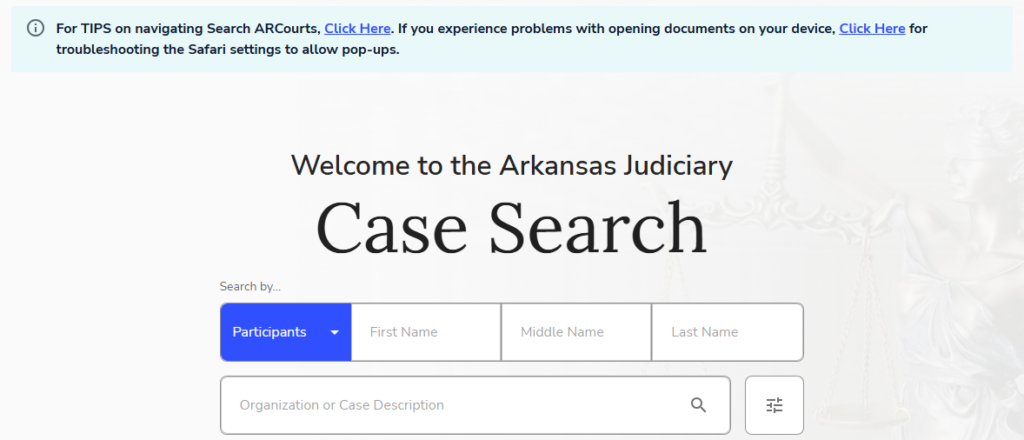
- Arkansas State Police (ASP) Criminal History System: This statewide database allows authorized users to request criminal history information.
- Local County Sheriff’s Offices: Many counties maintain online arrest logs for recent bookings. Examples include Pulaski County, Benton County, and Washington County.
- Arkansas Department of Correction: Provides inmate arrest and booking data for those currently in state correction facilities.
These portals usually display data like the individual’s name, booking date, charges, arresting agency, and custody status.
Step: Searching Online
- Visit the official portal: Start with the ASP Criminal History Search page or the relevant county sheriff’s website.
- Select search type: Many platforms allow searching by name, date of birth, or booking number.
- Enter required fields: Input first and last name; middle names are optional but improve accuracy. For better results, include birth year or city.
- Complete CAPTCHA or verification: This ensures the search request is valid and prevents automated access.
- Submit the form: Click “Search” or “Submit” to view results.
What Information Is Included in an Arrest Record?
An Arkansas arrest record provides a detailed snapshot of a person’s arrest history, including personal details, charges, and legal proceedings. It is a public record maintained by law enforcement agencies to document each arrest accurately.
Arrestee Information
Arrest records begin with identifying details about the individual involved. This includes:
- Full name
- Date of birth
- Gender and physical description (height, weight, hair color, eye color)
- Aliases or nicknames
- Address at the time of arrest
These details help law enforcement and the public distinguish between individuals with similar names and provide context for the arrest report.
Arrest Date, Time, and Location
Every arrest record lists when and where the arrest occurred. This includes:
- Exact date and time of arrest
- City or county where the arrest took place
- Specific location or address, if available
Recording the arrest location establishes the arrest jurisdiction, which determines which law enforcement agency and court handle the case.
Arresting Agency
The record identifies the law enforcement agency responsible for making the arrest. This could be:
- City police departments
- County sheriff’s offices
- State police or highway patrol
Knowing the arresting agency is important for verifying the authenticity of the record and for follow-up inquiries about the arrest.
Charges and Charge Codes
Arrest records include detailed information about the offenses or charges filed. This may involve:
- Charge descriptions (e.g., theft, assault, DUI)
- Charge codes used by law enforcement for internal classification
- Severity of the charge (misdemeanor or felony)
Multiple charges may appear if the individual was arrested for more than one offense.
Booking Information
Booking information documents the initial processing of the arrestee at the detention facility. Key elements include:
- Booking date and time
- Mugshot
- Fingerprints
- Assigned booking ID or number
This section often forms the core of the arrest report and links to other legal and administrative records.
Court Information and Case Status
Arrest records provide details about the court handling the case and its current status. This may include:
- Case number
- Court location
- Upcoming hearing dates
- Disposition of the case (pending, dismissed, or resolved)
Tracking case status helps follow the progression of the arrest through the legal system.
Bond and Release Information
If applicable, the record shows bond or bail details, including:
- Bond amount
- Type of bond (cash, surety, or personal recognizance)
- Release conditions
Bond information indicates whether the individual was released before trial or remained in custody.
Legal Governance of Arkansas Arrest Records
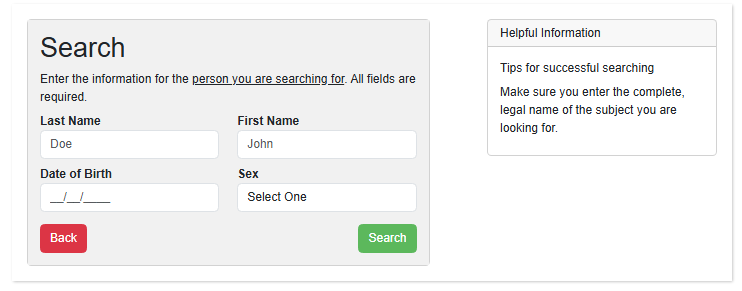
Arkansas arrest records are regulated under state law, https://arch.ark.org/search, ensuring proper handling, storage, and public availability. The Arkansas State Police (ASP) oversees record management, while public access is governed by the Freedom of Information Act (FOIA).
State Laws Governing Arrest Records
Arrest records in Arkansas fall under several legal frameworks that define how law enforcement collects, stores, and shares this information. The Arkansas Criminal Justice Act sets the standards for record retention and reporting. These laws require law enforcement agencies to maintain accurate and up-to-date arrest documentation, including the suspect’s personal information, charges, and booking details.
Points about Arkansas arrest laws:
- Arrest records must be entered promptly into official databases.
- Certain sensitive information, such as juvenile records or ongoing investigations, may be restricted.
- Agencies must comply with state statutes when sharing records with other law enforcement bodies.
This framework ensures the criminal justice system maintains accountability while balancing privacy concerns.
Arkansas State Police Role
The Arkansas State Police (ASP) acts as the central repository for criminal and arrest records statewide. They collect information from local police departments, sheriffs’ offices, and other law enforcement agencies. The ASP’s Criminal Records Division verifies records, updates charges, and maintains a secure database.
Responsibilities of ASP include:
- Maintaining public arrest records, Arkansas citizens can request.
- Providing law enforcement agencies with verified data for investigations.
- Supporting background checks for employment, licensing, or volunteer purposes.
ASP ensures the information shared is accurate and complies with state regulations, which helps protect both public safety and individual rights.
Public Access and FOIA
Arkansas citizens can request arrest records under the Freedom of Information Act (FOIA), sometimes called the public access law. FOIA allows individuals to obtain copies of arrest records unless restricted by law. Requests may include charges, arrest dates, and booking details.
Important FOIA points for Arkansas arrest records:
- Request submission: FOIA requests are submitted to the agency holding the records, often the local police department or ASP.
- Response timeframe: Agencies typically respond within a few business days, depending on record volume.
- Fees: Some requests may involve minor processing or copying fees.
- Exemptions: Ongoing investigations, confidential informants, or juvenile records are often protected.
FOIA provides transparency while protecting sensitive information, making public arrest records in Arkansas accessible for legitimate uses like research, legal matters, or background checks.
Who Can Access Arkansas Arrest Records?
Anyone seeking Arkansas arrest records must meet specific eligibility requirements and often provide consent. Access is limited to authorized parties to protect privacy and comply with state law.
Eligibility Rules for Arrest Records
Arkansas arrest records are not automatically public. Certain groups can request these records, but the state enforces privacy restrictions to prevent misuse. Eligible requesters typically include:
- Law enforcement agencies for official investigations
- Attorneys and legal representatives for court-related purposes
- Employers conducting background checks when legally permitted
- Individuals requesting their own arrest records
Access depends on the purpose of the request and whether the requester can demonstrate legal authorization. Personal use often requires proof of identity, while professional use may need additional documentation.
Consent Requirements
Consent is often required to release an arrest record, especially when the information involves a third party. Written authorization ensures the individual’s privacy rights are protected. Consent for an arrest record request can take different forms depending on the situation:
- Individuals may sign a release form for employers or legal entities
- Legal representatives may provide documentation proving authorization
- Certain records require notarized forms to confirm consent
Arkansas law limits the sharing of records without consent, emphasizing privacy restrictions. Violating these rules can lead to fines or legal penalties.
Written Consent Forms
For formal requests, Arkansas uses specific forms, such as the ASP‑122 form, to document permission. This ensures transparency and protects the rights of the person whose record is being requested.
Points about written consent forms include:
- They clearly identify the person granting consent
- They specify who can access the records and for what purpose
- Forms may not need notarization depending on the requesting agency
- Proper submission is mandatory for processing
Organizations often require completed forms before releasing records to avoid legal issues. Some agencies provide online forms, while others request paper copies for verification.
In‑Person Access & Alternative Methods
Arkansas residents can obtain police records and arrest history by visiting state or local offices in person. Requests typically require proper identification and sometimes specific forms to complete.
Accessing police records in Arkansas is possible through several channels, including the Arkansas State Police Identification Bureau, local sheriff’s offices, and municipal police departments. Each location has its own process, fees, and required documents, so planning saves time and ensures a smoother request.
Arkansas State Police Identification Bureau
The Arkansas State Police Identification Bureau handles statewide criminal record checks and arrest history requests. Residents can visit the bureau to request criminal background checks or copies of arrest records.
Requirements for in-person visits:
- A valid government-issued photo ID (driver’s license or passport).
- Completed request forms are available on the Arkansas State Police website or at the bureau.
- Payment for processing fees, which vary depending on the type of record requested.
The bureau offers fingerprint-based checks, which are the most accurate method for verifying arrest history. Walk-in services are usually available during regular business hours, but prior appointments may speed up processing.
Sheriff and Local Police Departments
Many county sheriff’s offices and city police departments provide copies of local arrest records. These offices typically handle recent arrests or incidents within their jurisdiction.
Steps to request records at local offices:
- Visit the sheriff or police department during office hours.
- Present a valid ID.
- Complete any required forms for the arrest history request.
- Pay applicable fees, usually ranging from $5–$20 per record.
Some departments may also allow requests via mail or email. Checking the department’s website before visiting ensures the correct forms are completed and any special procedures are followed.
Fees, Processing Time & Requirements
Arkansas arrest records come with specific fees, processing timelines, and documentation requirements. Most requests require a $25 payment and can take a few days to several weeks to process, depending on the agency and method of submission.
Arrest Record Fees in Arkansas
The standard arrest record fee in Arkansas is typically $25 per record request. Some counties may charge additional costs for copies or certified documents. Payment must usually accompany the request and can be made in several ways:
- Money order or cashier’s check payable to the relevant law enforcement agency.
- Credit or debit cards accepted by some sheriff’s offices or state portals.
- Personal checks, if allowed, though processing may be delayed until funds clear.
For multiple records, some offices allow a flat fee for batch requests, but it is best to confirm with the local agency first.
Payment Processing & Timelines
Payment processing affects how quickly a request is fulfilled. Once the fee is received, the turnaround time depends on the method of request:
| Request Method | Typical Processing Time | Notes |
|---|---|---|
| Online portal | 1–3 business days | Faster for digital copies |
| Mail request | 2–4 weeks | Depends on postal delivery and payment clearance |
| In-person | Same day to 5 days | Often fastest, may require ID verification |
Most law enforcement offices issue records in electronic PDF format or hard copy. Agencies may also provide tracking numbers for mailed requests.
(FAQs) About Arkansas Arrest Records
Arrest records in Arkansas are public documents that include personal details, arrest dates, charges, and case outcomes. Certain rules govern who can view them, and some records may be restricted, such as juvenile cases.
What Are My Rights Regarding Arrest Records in Arkansas?
Residents have the right to request their own arrest records from law enforcement agencies. These records contain arrest dates, charges, outcomes, and personal information. Juvenile records or ongoing investigations may be restricted. Individuals can access their own records for personal verification, legal purposes, or background checks. Law enforcement must comply unless the records are legally protected.
How Long Are Arrest Records Kept?
Arkansas maintains arrest records indefinitely in state and local databases. Records of convictions remain permanent, while non-conviction records may become less accessible over time. If charges are dropped or cases are dismissed, some records can be sealed or limited in public view. The state ensures that official documentation remains for legal and law enforcement purposes.
Are Fees Required?
Yes, obtaining arrest records usually involves a small fee depending on the agency and format. State police may charge $5–$10 per record, while local departments may charge per page. Online databases may have subscription or per-search costs. Payment is typically required before records are released, and some agencies accept credit, check, or money order.
Who Can View Arrest Records?
Arrest records are generally public and accessible to law enforcement, legal representatives, employers conducting background checks, and individuals requesting their own information. Exceptions include juvenile records or sealed cases, which require court approval. Viewing rights depend on the record type and its legal status.
How Do I Search Arrest Records Online?
Arkansas offers online search portals through the State Police and county law enforcement websites. Users can search using full name, date of birth, or case number. Results may include arrest details, case status, and related court actions. It’s recommended to verify information and check multiple sources for accuracy.